
What makes you you?
Karma is word that a lot of people throw around, not just in India, but world wide. But I believe 99.99% of the ones using it have no clue of what it means.

The above picture is more or less an accurate depiction of how Karma is perceived in the west. I might have mentioned it before but every time I use the word west to describe Europe and Americas, I get this thought again. Isn’t it funny that we define the start and end of a spherical object? Well we didn’t define it, some idiot did and rest of us accepted. That in a way makes us all idiots. Another funny thing is that Africa and South America are not categorised as west. So, West is a name given to Caucasians by Caucasians. In simple words White people. Coming back to Karma, The above image depicts what White people think Karma is. What goes around, comes around. This is too simplistic, In India, the definition is more complex. There is a endless cycle of birth and death, path to Moksha/emancipation and how Karma influences it. So, more or less the same What goes around comes around but spread across multiple life times. Again a random thought, food for thought everyone. Why do we think we humans are superior beings and come up with all these ideas? Why is all this stuff not applicable to other living organisms?
This is the thought that triggered me to implore another interpretation of the term. Karma basically says, good things happen to people who do good and bad things happen to people who do bad. But what is good and what is bad? Its again something we defined our selves. What was good say a hundred years ago is not good now. There are a lot of social practices that are perceived as superstitions, old school and BAD now. This entire discussion on Karma is centred around what is Good and what is Bad. In my opinion, there is no good and bad. There is only good for me and bad for me. People use concepts like Karma to try persuade me do something that’s bad for me and good for them. Sounds pretty selfish? May be, but its sounds very logical to me. A donation is not good for me, world runs on money and having more of it is good for me. So, they call it a good karma and ask for it. Again sounds selfish. I disagree. It applies to you also. You just don’t realise it. Got a job? Good for you, bad for all the other applicants. Had a good meal? Good for you, bad for a plant or an animal that ended up in your stomach. Oh yeah. Plants are also living things. We don’t know how they feel, so you can’t assume its happy to be your lunch.
Take the example of a social carnivore.No not humans, I’m talking about a Wolf. A Wolf is a carnivore by birth, so it has to Kill. But killing is a bad thing. Not if you kill for self preservation? What if its done for the preservation of your kin? Self protection? So in all these cases its OK to kill. Some times Animals fight over a mate. The most powerful one in the pack gets the prettiest mate, so they fight. sometimes end up gravely wounding or even killing an opponent. So is this bad? Does the animal in next life gets born as a lobster and ends up on a rich man’s plate? Its not fair isn’t it?
So I see Karma in a different way. Hear my pitch and see if it makes more sense.
I believe Karma is what makes you you and not the way everyone else thinks.
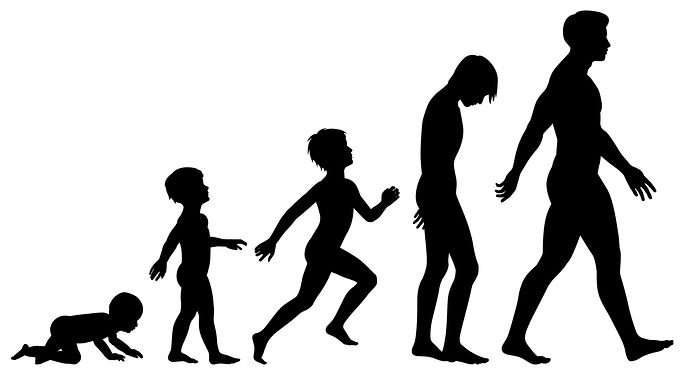
From an organisms birth to death, there are a lot of things that influence it. The longer the life, the longer the learning curve. There are some major influences and there are some minor influences. Lets take the Human example here. (This explanation involves a human because I don’t remember my past life as some other organism)
For me Karma constitutes of multiple things, but the major things are
Parents and family: The first place we learn things is at home. We imitate our parents and other family members. We think what they do is the right thing to do. We decide what they say is BAD is BAD. This is our first distinction of Good from Bad.
Neighbours & friends:
The next big influence is the people who we spend more time around as kids. Friends and their parents who mostly are our neighbours. Here again we start to make associations of good and bad things.
Daily experiences: As kids most of our time is sent at Home and School. At home the family and neighbours form our perception of good and bad, at school our Teachers define whats good and bad. Anything you are punished for is a bad thing, right? These are our first daily interactions and experiences. Here again there is a hierarchy. Parents supersede any thing that teachers say. This is because we trust our parents more than our teachers.
Next interactions as you grow older come in college, travels, work and all places you go, all people you meet. When ever you do something and something bad happens to you, you mark it as a bad thing and avoid doing that and vice-versa.
Now that I have established how you accumulate Karma, Lets see how it makes you you and how it effect others around you. If you get a chance to travel with me and I drive, You will see that I do two things for sure. Honk when I overtake someone and stop at an intersection even when there are about 5 seconds left for the red light to switch on. This is because, I once got hit by another car while overtaking as the driver changed lanes without looking into the mirror and also I got a traffic fine for passing through a red light. These two bad experiences, lead me to change my driving style. So, this changes when I reach my destination and also influences when everyone else behind be reach their destination. In turn it causes a ripple effect on what happens in lives of a LOT of people.
If a simple thing like a decision to stop or go at an orange light can influence so many things. Imagine what Karma can do.
My point is that Karma is nothing but things that happen to you and around you. You get influenced by them, your brain gets conditioned to doing or not doing things based on what you perceive from things that happen around you. This is why you behave the way you do and this is what makes you you. Well that and the primal instincts we have. And that’s a discussion for another day!!
 Random thoughts of a confused primate